Dangote Petroleum Refinery Plc has recorded a daily offtake of 50 million litres of Premium Motor Spirit (PMS), marking a major milestone in Nigeria’s domestic fuel supply. The newly appointed Managing Director of the refinery, Mr. David Bird, disclosed this at a press briefing in Lagos on Wednesday, noting that the facility sustained seamless fuel […]
Dangote Petroleum Refinery Plc has recorded a daily offtake of 50 million litres of Premium Motor Spirit (PMS), marking a major milestone in Nigeria’s domestic fuel supply.
The newly appointed Managing Director of the refinery, Mr. David Bird, disclosed this at a press briefing in Lagos on Wednesday, noting that the facility sustained seamless fuel supply during the Christmas and New Year holidays.
Bird said the refinery currently evacuates over 1,000 trucks daily, stressing that the achievement reflects not only production capacity but also effective distribution. According to him, daily offtake fluctuates based on demand, with lower volumes typically recorded on weekends, but the refinery remains confident of sustaining the 50 million litres benchmark.
“Offtake has matched production at about 50 million litres per day. Where domestic demand is lower, we have the capacity to export excess volumes,” he said.
Bird added that stable and relatively lower fuel prices from domestic refining are contributing to broader economic stability, including support for the naira. He noted that Nigeria is now consuming world-class fuels produced to Euro 5 standards, with the refinery exporting gasoline to Europe and jet fuel to markets such as Dubai.
He criticised the historical dumping of substandard fuels in West Africa, describing Dangote Refinery’s output as a significant public health improvement due to lower sulphur content and cleaner fuel quality.
On expansion plans, Bird said Dangote Petroleum Refinery is investing further in refining capacity and petrochemicals, with plans to scale polypropylene production to 2.4 million tonnes annually. He explained that the expansion would strengthen domestic manufacturing, deepen import substitution, and create a large industrial ecosystem.
The Managing Director dismissed claims by some industry players that the N739 petrol price was anti-competitive, insisting that the pricing remains market-driven and offers consumers a choice.
“The retail price is fully competitive. Consumers can choose freely, and there is a need to evolve how regulation supports market efficiency,” he said.
Also speaking, Head of Communications for the Dangote Group, Mr. Anthony Chiejina, said ongoing global supply disruptions, including the crisis in Venezuela, highlight the importance of domestic refining for producing countries like Nigeria. Bird added that reliance on imports exposes the country to global price volatility, while local refining provides stability.
He described the Dangote Refinery as a flexible merchant refining, blending and trading platform rather than a conventional single-crude refinery, noting that despite ramping up units in the second half of 2025, the facility consistently supplied over 50 million litres of finished products daily, at times exceeding 52 million litres.
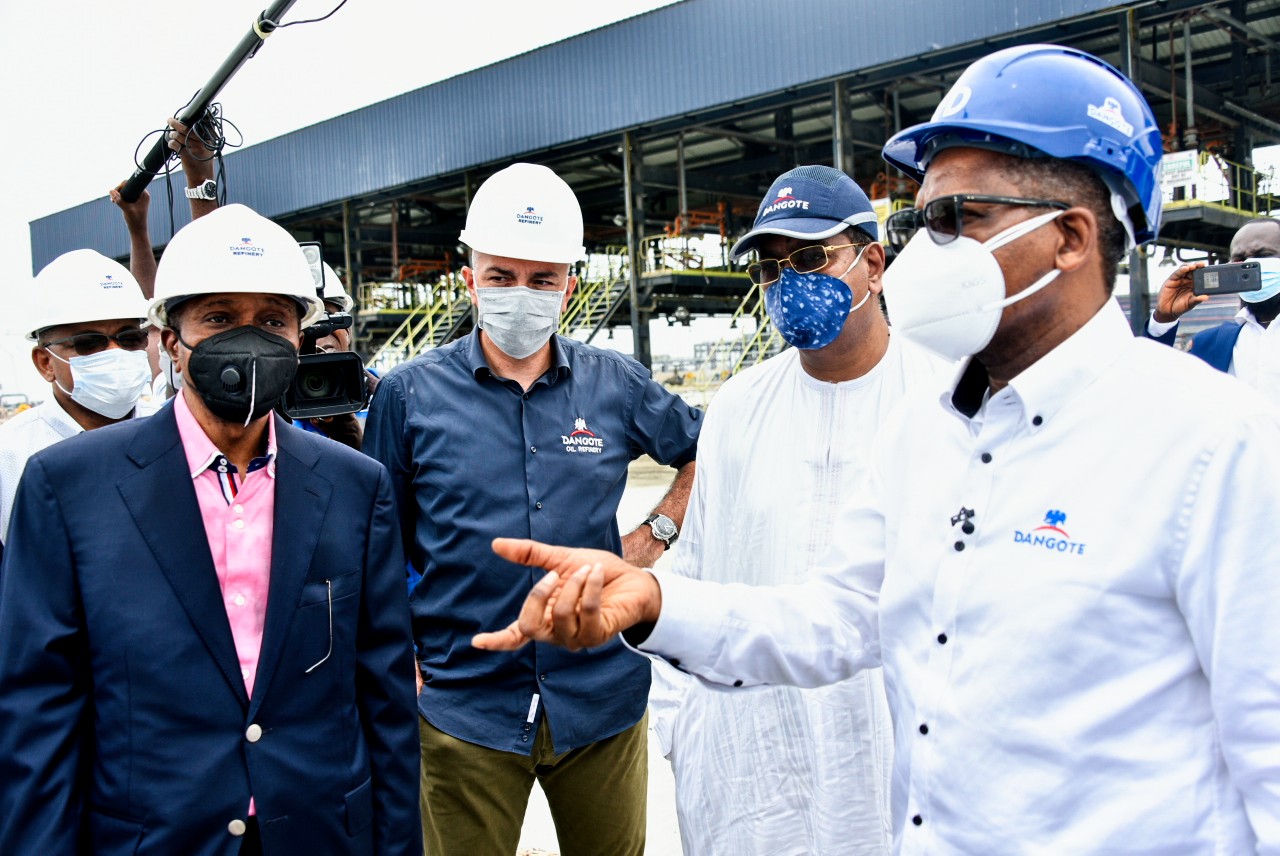
On logistics, Bird said about 4,000 trucks are currently on site, with full rollout of free trucking pending the deployment of a computerised security system to ensure accurate product delivery.
Providing updates on petrochemicals, he said the existing polypropylene plant has a capacity of 800,000 tonnes, with an additional propane dehydrogenation (PDH) unit expected to raise output to 1.2 million tonnes, before the final expansion to 2.4 million tonnes. He added that future diversification could include detergents, base oils, lubricants and Liquefied Petroleum Gas (LPG).
On the crude-for-naira programme, Bird said 30 to 40 per cent of the refinery’s crude supply currently comes through the scheme. He noted that ongoing engagement with the Nigerian National Petroleum Company (NNPC) Limited and the Federal Government has helped stabilise the naira, adding that the initiative could be expanded in Nigeria’s long-term interest.